The first time I saw it, I honestly thought it was some kind of witchcraft.
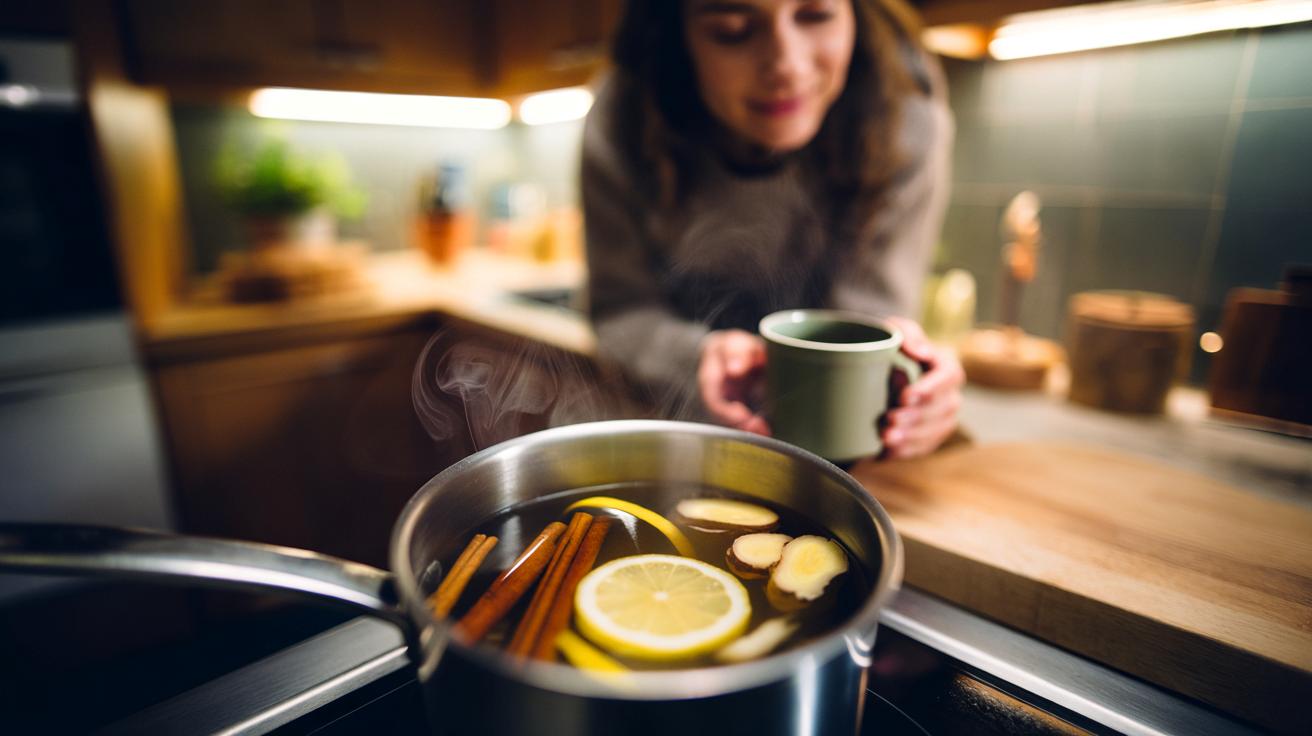
A small kitchen, late evening, the hum of the extractor fan, and on the stove: a pot where lemon peels, cinnamon sticks and slices of fresh ginger were quietly boiling. The air was thick with a spicy, citrusy warmth. My friend leaned on the counter, hands wrapped around a mug, and said, “Just smell this. Your body will understand.”
I watched the steam rise, almost oily with essential oils. The smell clung to my jumper, to my hair, to my mood. There was something strangely comforting in that simple mix of leftovers and spices. Not a fancy supplement. Not a detox powder from Instagram. Just peel, bark, root.
She swore she slept better on the nights she made it. I went home wondering what exactly was going on in that pot.
Why people are boiling lemon peel, cinnamon and ginger right now
Scroll through social media late at night and you’ll notice it. Short videos of hands tossing lemon peel, cinnamon sticks and ginger into a saucepan. A soft-boiled ritual, filmed from above, promising calm bellies, lighter mornings, fewer colds. It looks almost too simple compared with the avalanche of wellness products lining supermarket shelves.
Behind the trend is a basic human reflex: when life feels heavy, we go back to heat, to scent, to grandma’s kind of “medicine”. This trio has that old-world feel, even if you’re making it in a tiny city flat. The sound of the simmering water, the slow colour change, the first rising wave of spice and citrus – it taps straight into the nervous system.
On a very practical level, people report small but real shifts. Less bloating after dinner. A throat that feels soothed, not raw. Sugar cravings that calm down once the cinnamon kicks in with its soft sweetness. Nothing miraculous. Just noticeable enough that you start saying, “Put the kettle on, I’ll chop the ginger.”
Studies on these ingredients aren’t perfect, yet a few patterns keep coming up. Ginger has been linked with reducing nausea and mild digestive discomfort. Lemon peel is naturally rich in flavonoids, those plant compounds often mentioned in heart-health and anti-inflammatory research. Cinnamon shows up in papers about blood sugar balance and antioxidant effects.
Alone, each of these is interesting. Together, gently boiled in water, they create a kind of aromatic “broth” of essential oils and active molecules. Your kitchen becomes a small lab without the white coat. The heat helps release the oils from the peel and spices into the water and air. So you’re not just drinking it, you’re breathing it in. That’s why this simple pot on the stove can feel oddly powerful.
How to prepare it at home without turning it into a chore
Think of this mix less as a strict recipe and more as a friendly ritual. Take the peel of one unwaxed lemon – not the whole fruit, just the yellow skin, sliced into strips. Add one cinnamon stick and three or four thin slices of fresh ginger to a small saucepan. Cover with about a litre of water, bring to a gentle boil, then lower the heat and let it simmer for 10 to 15 minutes.
You’ll see the water darken slightly and smell the scent getting rounder, deeper. At that moment, turn off the heat, let it rest a couple of minutes, then pour into a mug through a small strainer. If you like, add a tiny teaspoon of honey once it has cooled a bit, so you don’t kill off its natural enzymes. *Drink slowly, almost like soup, and notice what your body says back.*
➡️ I learned it at 60 : people know difference between white eggs and brown eggs
➡️ Putting a dry towel into the dryer with your wet clothes can reduce the cycle time and save on costs
➡️ Skipping the gym for walking works "but only if you walk non-stop for 30 minutes at a 5 km/h pace"
➡️ Why wearing jeans in cold winter weather is discouraged "and what to wear instead to stay warm"
➡️ Emergency declared in Greenland as researchers spot orcas breaching close to melting ice shelves
Soyons honnêtes : personne ne fait vraiment ça tous les jours. Some evenings you’ll be too tired, some mornings too rushed. That’s okay. Think in small cycles. Three or four evenings in a row when you feel heavy or run down. Or a quick pot on Sunday night to reset after a wild weekend of takeaways. What matters is how it fits your real life, not some perfect wellness schedule.
There are a few frequent mistakes that quietly ruin the experience. Overloading the pot is one of them. If you throw in five sticks of cinnamon and a whole root of ginger, the drink gets harsh and aggressive. You end up blaming the recipe, when the problem was just enthusiasm. Another classic: boiling it too long. After 20–25 minutes on high heat, the water can turn bitter, especially with lemon peel.
On a more emotional level, people often expect too much, too fast. One mug won’t cancel out months of stress, junk food or sleepless nights. On a cold evening, though, a warm cup can be the first small “yes” you say to your body. On a busy Thursday, it can replace that third coffee that was about to push you over the edge. On a lonely day, the simple act of chopping, stirring, waiting can feel unexpectedly grounding.
There’s a line that comes up often when I talk to herbalists about these small kitchen rituals:
“The strength of simple plants isn’t in one dramatic moment, it’s in the quiet repetition of tiny, caring gestures.”
Boiling lemon peel, cinnamon and ginger falls right into that category. It’s not a cure, it’s a gentle companion. A warm, drinkable reminder that your body is still capable of comfort.
For quick reference, here’s how many people like to adapt their pot:
- For digestion after heavy meals: extra ginger, less cinnamon.
- For a cosy night mood: an extra cinnamon stick, maybe a slice of orange peel.
- For “I feel a cold coming”: more lemon peel, a touch of raw honey after simmering.
What this little pot is really “for” in everyday life
Ask ten people why they boil this mix and you’ll get ten different answers. Some swear by it for post-dinner digestion. They drink a mug instead of taking antacids, and claim they wake up less bloated. Others see it almost like a seasonal shield, a way to support their throat and chest when everyone at the office is coughing.
Then there’s the blood sugar angle. Cinnamon often appears in conversations about cravings and late-night snacking. A few small human studies suggest it may help the body handle glucose more smoothly. So some people use this drink as a gentle “bridge” between dinner and sleep, when the urge for biscuits usually hits. The slightly spicy, naturally sweet flavour can trick the brain into feeling treated, without an actual sugar bomb.
Beyond all that, the strongest effect might be psychological. On a tough evening, lighting the stove instead of unlocking your phone is a tiny revolution. The steam on your face, the smell that fills the flat, the few minutes of waiting – it’s a pause that brings you back into your body. On a basic nervous-system level, that warmth and scent signal safety. And when the body feels safer, digestion, sleep and immunity all work a little better. That subtle chain reaction is what many people are really chasing.
So is this drink “good for you”? Probably, within common sense and if you tolerate these ingredients. Is it magic? No. It’s a small pot on a kitchen stove, nothing more glamorous than that. But in an age of screens and supplements, maybe that’s exactly why it resonates.
This simple ritual has a way of spreading. Someone makes it once for a friend who has a sore throat. Someone else posts it in a family WhatsApp group with the message, “Mum used to do this.” Soon it becomes a kind of shared code. Not a miracle cure, just a warm answer to cold days and heavy dinners.
We’ve all had that moment where the body whispers “enough” before the mind is ready to hear it. A tiny recipe like this doesn’t fix everything, yet it gives you something to do with your hands when words aren’t quite there. You slice a lemon, break a cinnamon stick, crush a piece of ginger with the side of the knife. You watch the water tremble and darken. For a handful of minutes, your life becomes that pot, that steam, that quiet promise of feeling a little better.
| Point clé | Détail | Intérêt pour le lecteur |
|---|---|---|
| Simple ritual | Lemon peel, cinnamon and ginger simmered 10–15 minutes in water | Easy to try at home without special equipment or products |
| Potential benefits | May support digestion, comfort the throat and help manage cravings | Offers a gentle, realistic way to feel slightly better day to day |
| Sensory reset | Warmth, scent and steam create a calming, grounding moment | Helps break stress cycles and reconnect with the body in a few minutes |
FAQ :
- Can I use powdered cinnamon and ginger instead of fresh?Yes, you can, though the drink will look cloudy and the texture may be a bit gritty. Use small amounts (a pinch of cinnamon, a few thin slices of fresh ginger if possible) to avoid an overpowering taste.
- Is it safe to drink every day?For most healthy adults, small daily amounts are fine, but long-term heavy use of cinnamon or ginger can be too much for some people. If you have medical conditions or take medication, talk to a health professional.
- Can this replace my usual medicine for digestion or colds?No. This mix can offer comfort and light support, but it does not replace medical treatment, prescribed drugs or professional advice.
- When is the best time to drink it?Many people like it after dinner to aid digestion or about an hour before bed for its soothing effect. You can also sip it during cold mornings instead of a second coffee.
- Can children drink it too?In small, mild amounts and with less ginger and cinnamon, some families share it with older children, but always check with a paediatrician first, especially under 12 years old.